
Boeing 747...................................................................................Specifications
This Boeing 747 series 100, G-AWNB with the customer series number 136, was the second 747 delivered to the British Overseas Aircraft Corporation in 1970. 747s how ever, could first enter service with the airline in 1971, after a lengthy pilot strike in protest to the types introduction and the fear of job loses as a consequence. The aircraft later joined the British Airways fleet as a result of the merger of BEA and BOAC in 1974. She was then retired in 1998 at London Heathrow and is seen as she appeared at the airport in May 1973.
The Boeing 747 "Jumbo" Jet was the first of the wide bodies. This aircraft represents a massive step forward in the development of jet air travel. Due to the shear size of aircraft in this category there was an impact on virtually every field. The age of mass tourisum and mass transportation had been born. More people became able to afford to fly, as operating costs per seat per mile for the airlines were slashed. A new market was arroused. Surprisingly as a result the number of civil aircraft flying grew as the whole process snow balled. The civil aviation construction industry expanded. Airports and terminal sizes grew to accomodate more people and aircraft. Aircraft construction took on a new dimension as the worlds largest building, the 747 final construction hall was unvaled. Never before had such a vast construction like the 747 been made in "factory" conditions in mass production.
The basic Boeing 747-100 totally dwarfed the Boeing 707, the giant and queen of the skies at the begining of the 60s. The prototype 747 took off on its maiden flight from Boeing field, Seatle on 9 February 1969 amongst quite a specticle. The first airline to recieve the aircraft was Pan Am who's inagural flight from New York to Paris took place in 1970. In Europe the first airline to pioneer the new "Jumbo Jet" was Lufthansa, of Germany, in 1970.
The aircraft has been on a long road of development right up into the 1980s. Range was extended in the 200 series, also a special short range version (SR) series was developed for short high density flights. This series was bought exclusively by Japanese operators, Japan Airlines and All Nippon Airlines. The aircraft also appeared as a pure freighter (designated F), but also as a convertable, passenger / Freight aircraft (C) or as a combi model with a large side loading door thus allowing flights with passengers and freight simultaneously.
During the 1980s came the SUD (stretched upper deck) versions, the series 300, which first flew in 1982 and the 400 series, which first flew in 1988, the latter having very much extended range of operation. It had as well as the stretched upper deck, an extended wing span and the incorporation of winglets at the end of the wings to better fuel consumption levels. The range of these later models allow one stop services from Europe to Australia for example. None stop delivery flights from Boeing field, Seatle to as far away as Sydney Australia are not uncommon. These newer models also featured two crew flight decks. As oppose to three man flight decks with a flight engineer these newer models featured new navigation and avionics systems with CRT displays.
The Boeing 747 of today can carry 660 passengers 14,100 km with maxium fuel. These aircraft form the back bone of todays major air routes around the globe.

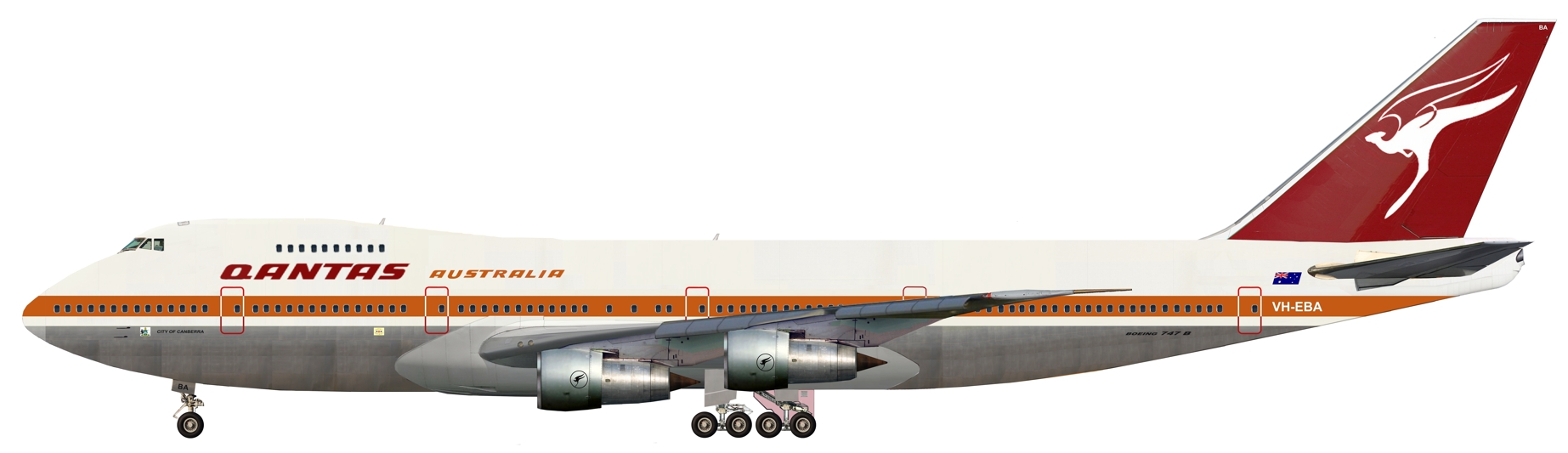
The first 747 for Qantas of Australia was also the first aircraft to fly with the twenty window upper deck, a series 238 B. Named "City of Canberra" this aircraft was delivered on the 30th of July 1071 and entered service on QF727 from Sydney via Perth to Singapore on the 17th of September 1971. By 1979 Qantas became the world's first airline to operate an all 747 fleet after phasing out the 707. VH-EBA has had a long career, being sold off by Qantas in 1984. She was still flying as XT-DMS for Kallat El Saker Air of Libya in December 2008. How ever in 2011 she went into storage and was broken up in February 2012.
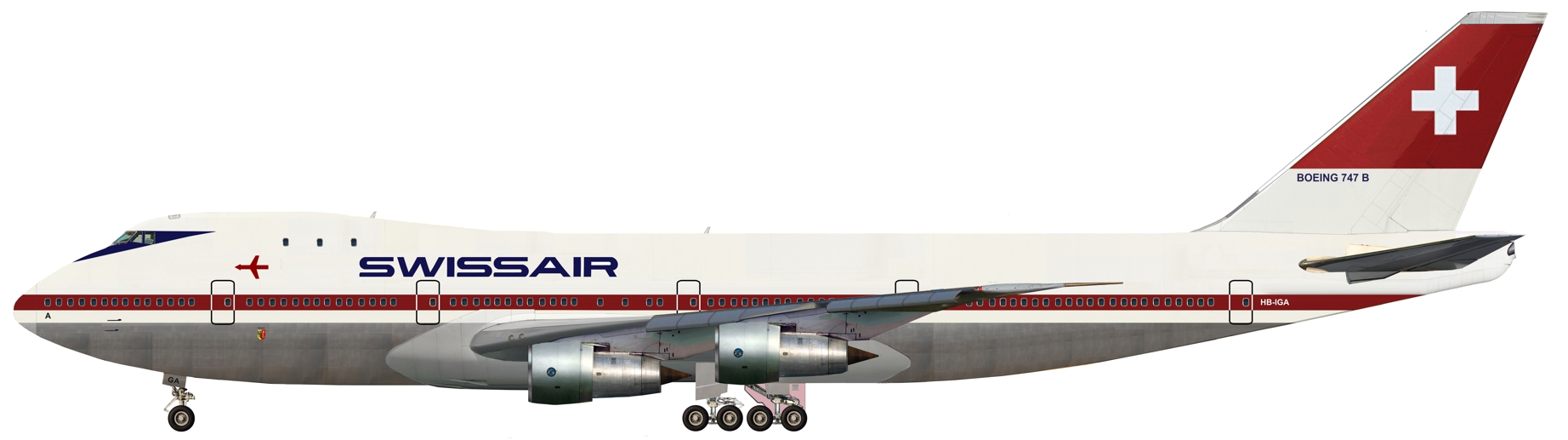
The first Boeing 747 for Swissair, HB-IGA a series 257B, first flew on the 15th of January 1971 being delivered new from the boeing plant to the airline on the 29th odf January 1971. She had a very varied career after that, being sold off by Swissair in 1982. She went into storage in November 2009 has since been scrapped.
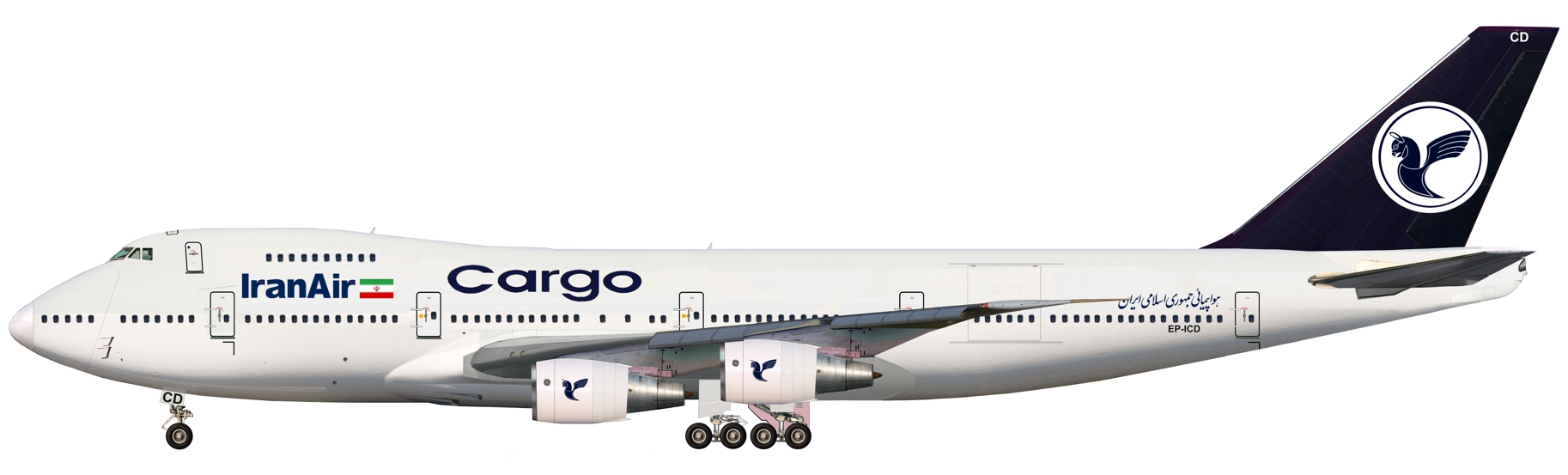
This aircraft first flew for Martinair of The Netherlands on the 26th of September 1982. It is a series 21AC. The "C" stands for "Convertable", a configuration which allows the partial or total removal of passenger seats allowing a freighter, passenger or freighter/passenger configuration. The aircraft also had a large side door to port and is equiped with an upswinging nose to allow access to the cargo hold from the front. Note also the upper deck door. other sereis 100 or 200 aircraft do not have this feature. Only 13 of this 747 variant were built. EP-ICD went to Iran Air in July 2008 and still flies for the airline today. Resplendend in "Cargo" titles and the Huming bird motif on the tail fin she is shown as she appeared at Frankfurt Rhein-Main International on the 7th of March 2010.

The "Maharaja", Air-India's offical mascot.
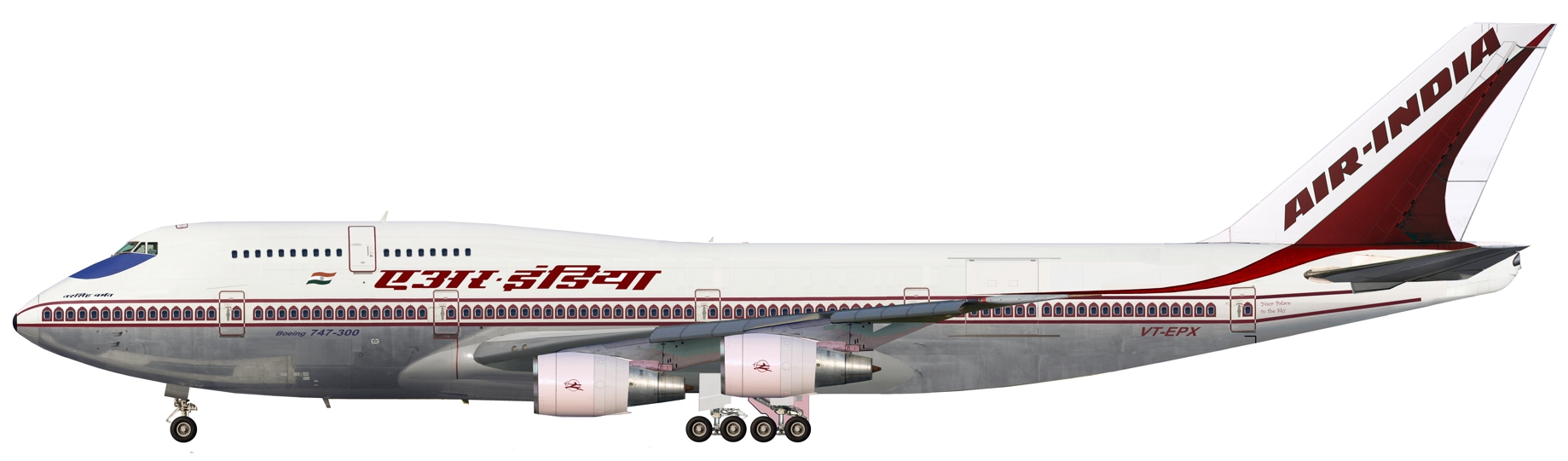
This series 337M of Air-India was delivered new from the maker to the airline on the 22nd of November 1988. Note the cargo side door. This aircraft was a combi cargo/passenger aircraft to be used in cargo, passenger or cargo/passenger configuration. The series 300 had the same wing as the 200 series but had a new stretched upper deck(SUD). At first this series was known as the 747 SUD. Ulitimately this version was superseded by the series 400 only two years after it's maiden flight. This particular aircraft adorned a new Air-India livery in the 1990's but customers preferred the "Palace in the Sky" logo and Air-India reverted back to the original colours as shown. Each window has as decoration the impression of an Indian palace window around it. VT-EPX was scrapped in 2009. Today Air-India has a new livery, but the row of "palace windows" remain.

This series 4H6 of Malaysia Airlines shows the predominant stretched upper deck and winglets typical for this model. The series with it's larger wing span and more powerful engines and greater take-off weights gave the 747 more range and passenger capacity. This aircraft was delivered new to Malaysia in 1993 from Boeing and Flies for Saudi Arabian Airlines since December 2013 on lease from Eaglexpress Air. She as seen as she appeared for Malaysia Airlines at Amsterdam Schiphol in March 2007.
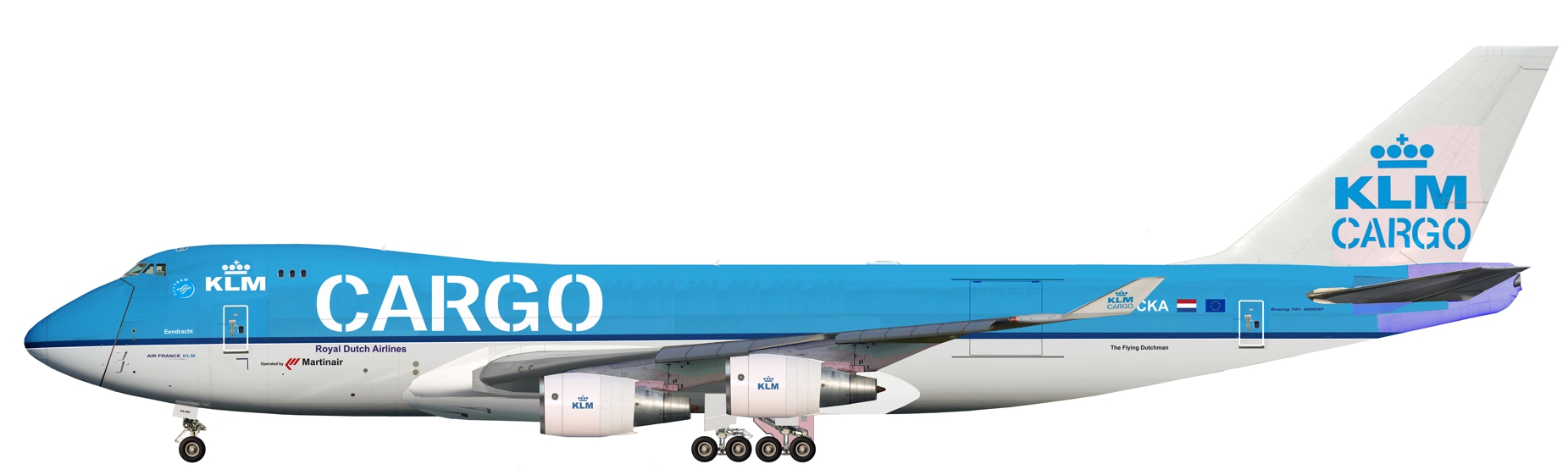
This KLM aircraft is a purpose built series 400 ERF (Extended Range Freight) version and represents the final development of the 747-400F airframe. Note the smaller upper deck in contrast to the 400 passenger version. Note also the lengthened fin root, an aerodynamic refinement introduced on the series 400 from 1994 onwards. This aircraft, PH-CKA (the registration is partially covered by the winglet) was delivered from Boeing on the 31st of March 2003 to KLM. She is shown here as seen at Amsterdam-Schiphol airport on the 20th of August 2010. Note the extra "Air France KLM" sticker on the forward fuselage. KLM became a part of the Air France Group after the two companies merger in September 2003. The second sticker "Operated by Martinair" indicates that the entire 400 ERF fleet has been leased to Martinair.